If you’re reading this, there’s a good chance you’re looking for the best interactive flat panel display in UAE. Maybe you’re planning to upgrade your classroom. Maybe you’re setting up a new meeting room. Or perhaps you’re simply trying to understand whether an interactive flat panel is worth the investment.
The short answer is yes.
Across the UAE, schools, universities, corporate offices, and government organizations are replacing traditional whiteboards and projectors with interactive flat panel displays (IFPDs). The reason is simple. They make teaching, learning, presentations, and collaboration much easier.
This shift is also supported by the country’s vision for digital transformation. Through initiatives like UAE Vision 2031 and UAE Centennial 2071, the government continues to encourage smart learning, digital workplaces, and technology-driven innovation.
The numbers also tell an interesting story.
According to recent market reports, the UAE smart learning market was valued at around $2.87 billion in 2024 and is expected to grow to over $6.42 billion by 2029, with an impressive 17.5% compound annual growth rate (CAGR). This rapid growth shows how quickly educational institutions and businesses are adopting smart technologies.
One of the biggest technologies driving this change is the interactive flat panel display in UAE.
So, what makes these displays such a smart investment?
Let’s explore the 10 biggest benefits of interactive flat panel displays for schools and businesses in the UAE.
1. It Makes Learning More Interactive and Engaging
Let’s be honest. Most students lose interest when they spend an hour looking at a whiteboard or watching slides on a projector.
Interactive flat panel displays completely change that experience.
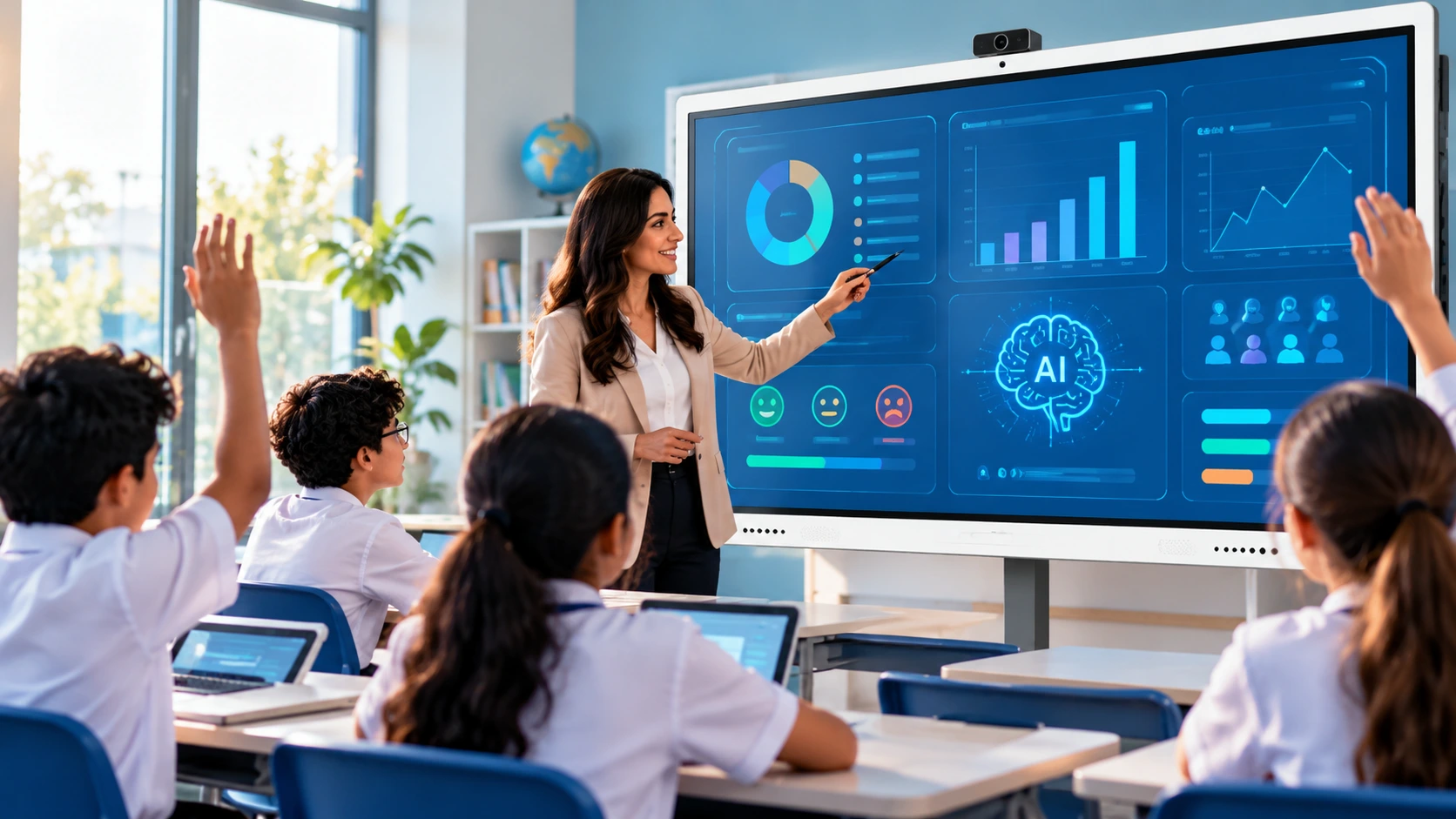
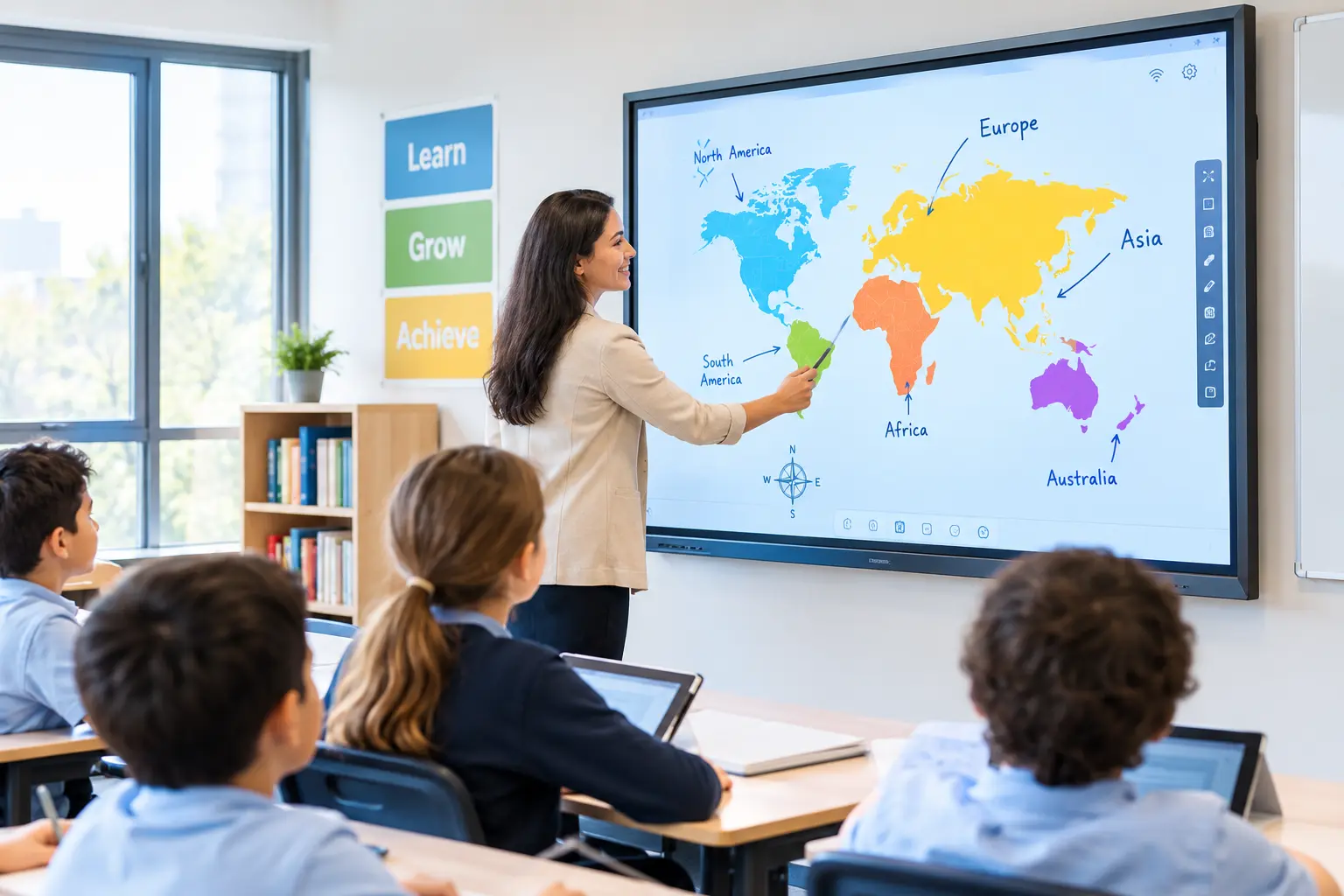
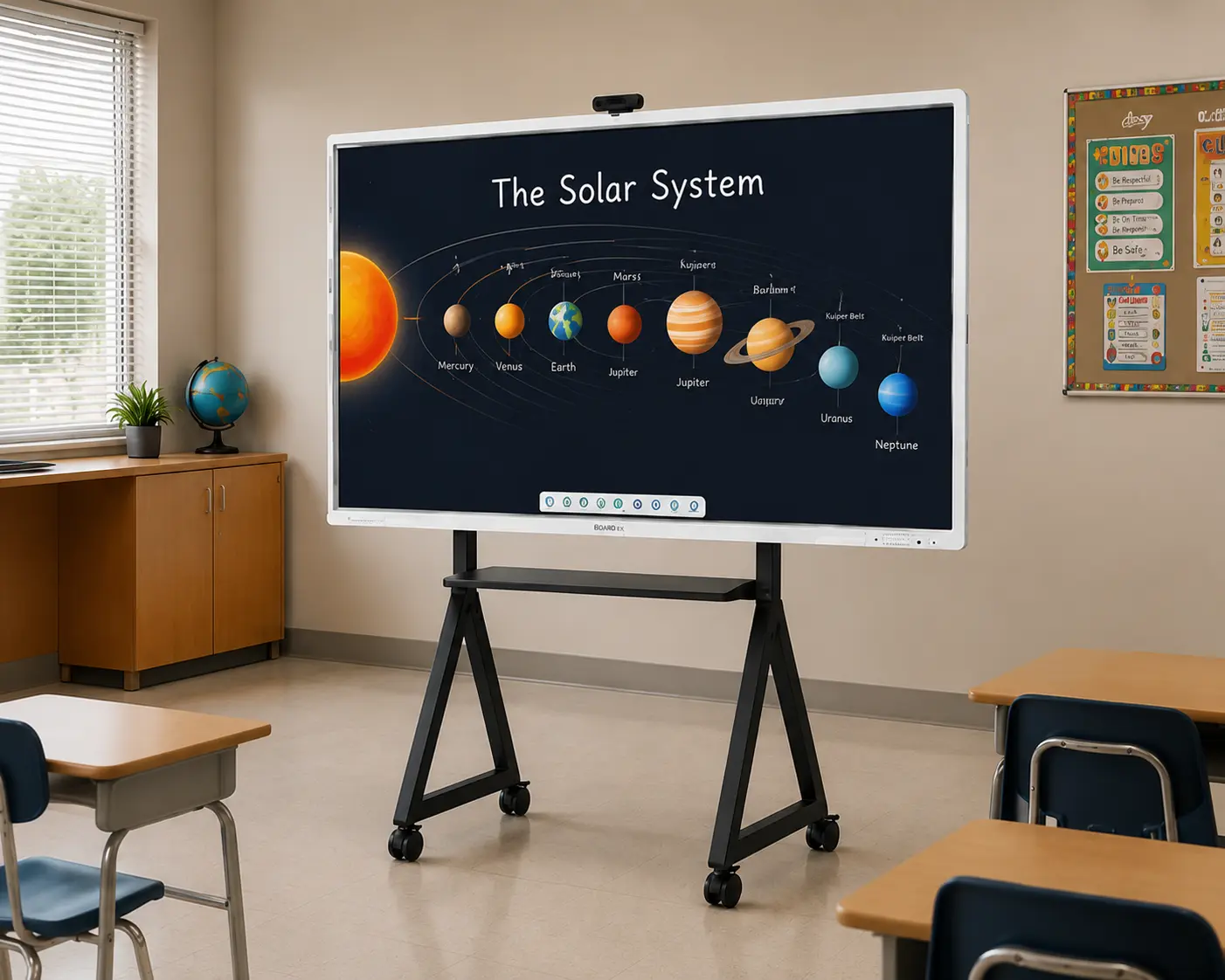
Teachers can switch between videos, presentations, websites, quizzes, 3D models, and handwritten notes within seconds. Students can also come to the screen, solve problems, move objects, and participate in classroom activities.
Instead of simply explaining the human body, a science teacher can display a 3D model, zoom into different organs, write notes directly on the screen, and allow students to interact with the lesson.
Research also supports this approach. Studies show that interactive visual learning can improve student knowledge retention by around 30% to 40% compared to traditional lecture-based teaching.
Instead of listening passively, students become active participants in the lesson.
2. Hybrid Meetings Become Much Easier
Have you ever started a meeting only to spend the first 10 minutes trying to connect a laptop, fix the projector, or sort out the audio?
It happens more often than we’d like.
Modern workplaces in the UAE are no longer limited to one office. Teams work from Dubai, Abu Dhabi, Sharjah, or even different countries. That means meetings need to be smooth, whether everyone is in the room or joining remotely.
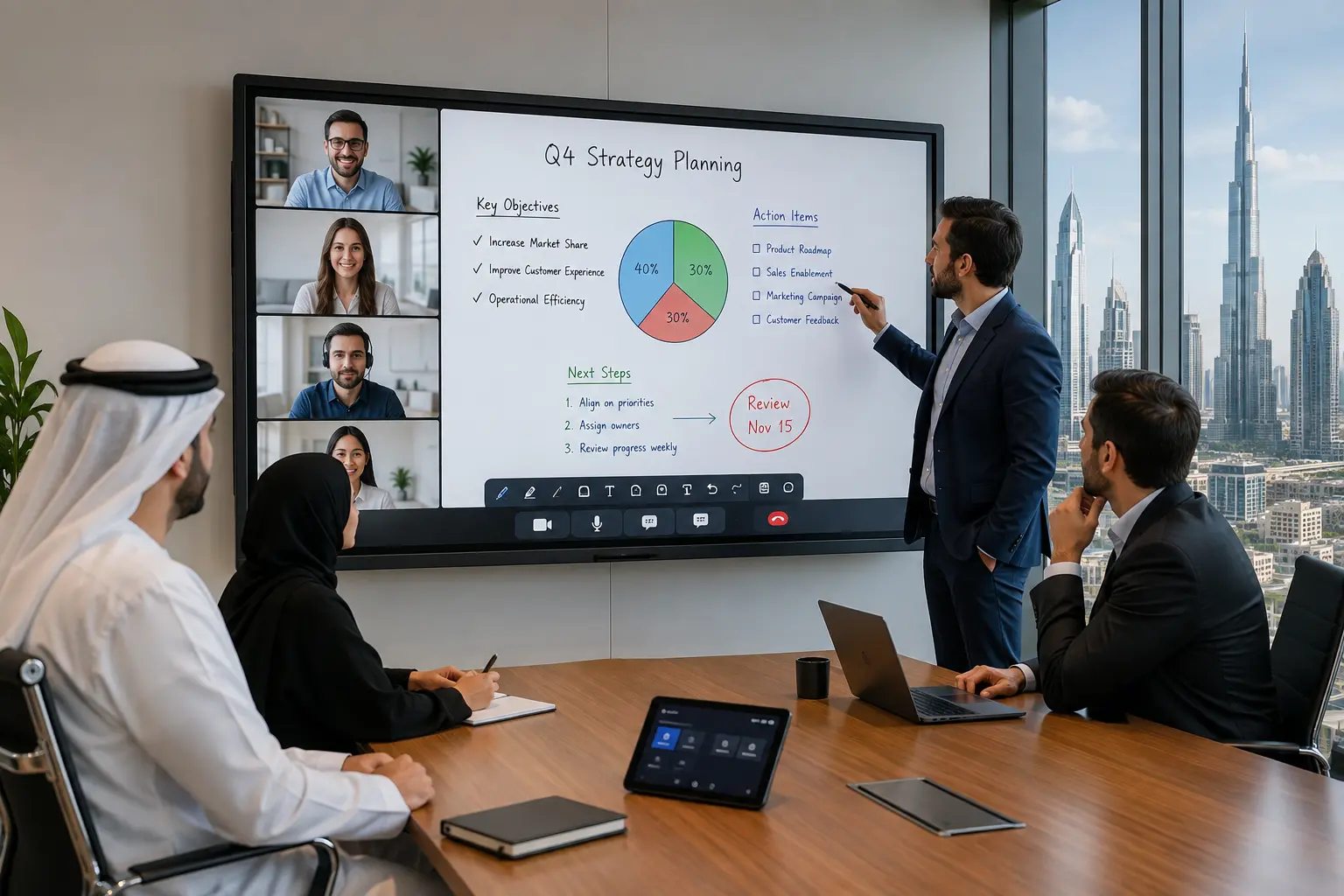
Most modern IFPDs come with a built-in 4K camera, multiple microphones, speakers, and support for popular video conferencing platforms like Microsoft Teams, Zoom, and Google Meet.
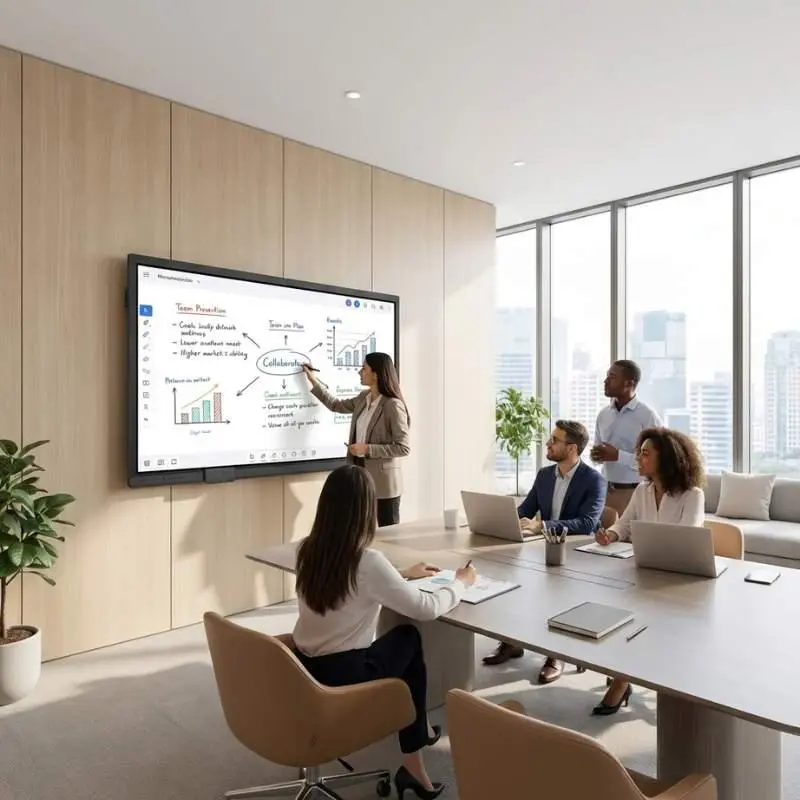
Imagine your marketing team in Dubai presenting a new campaign while your colleagues in Abu Dhabi add notes directly on the same digital whiteboard. Everyone can see the updates instantly, no matter where they are.
Instead of emailing different versions of presentations, everyone works together on the same screen in real time.
3. Crystal-Clear 4K Display Makes Everything Easier to See
Think about the last time you used a projector.
The room had to be dark…The image wasn’t very sharp…Someone standing in front of the projector blocked the screen.
Interactive flat panel displays solve all of these problems.
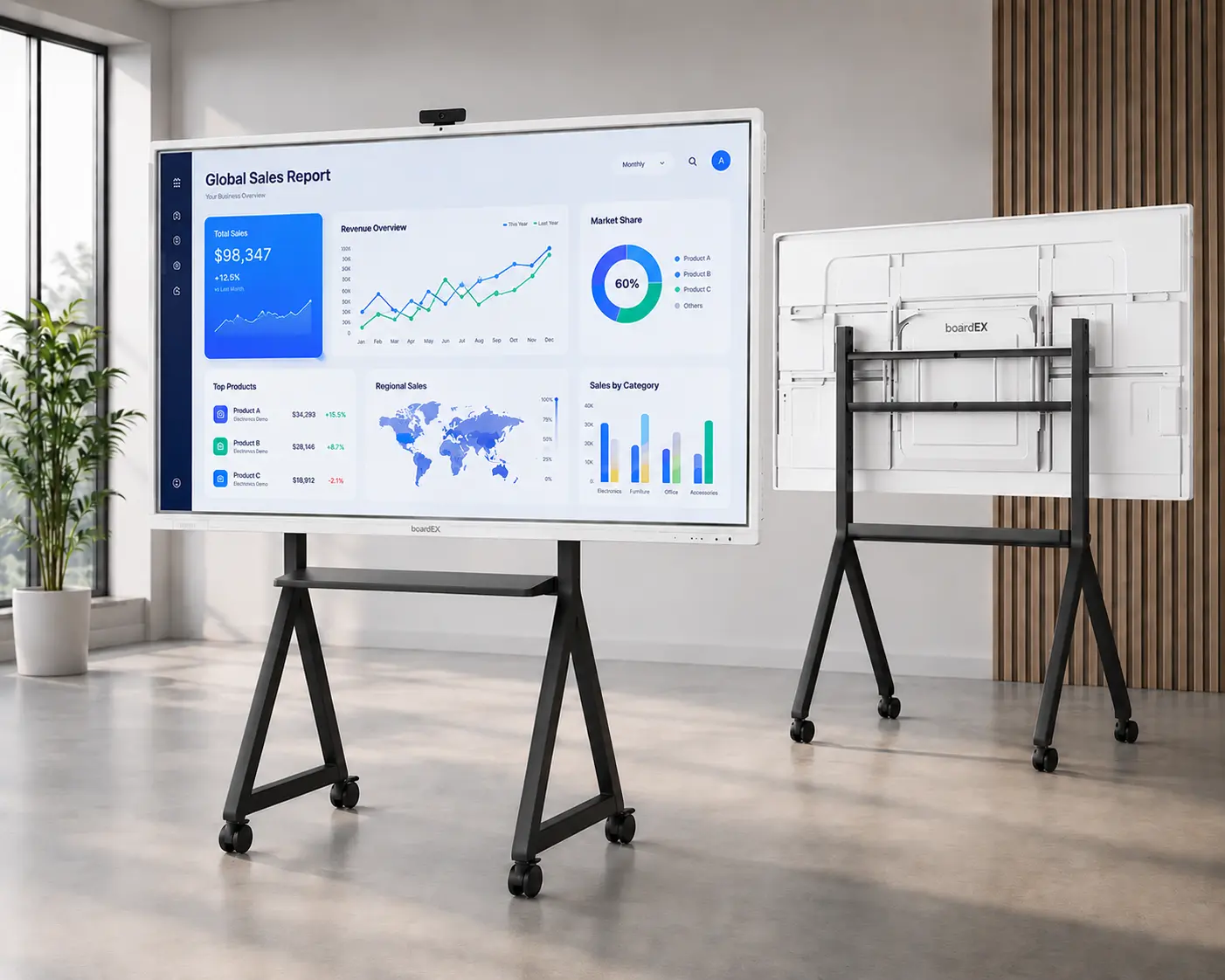
Most modern panels offer 4K Ultra HD resolution, delivering incredibly sharp text, bright colours, and detailed images.
In fact, 4K UHD panels now account for nearly 60% of all interactive flat panel installations worldwide because they offer better picture quality and a much better viewing experience.
Another advantage is the anti-glare and anti-fingerprint glass.
Even in brightly lit classrooms or conference rooms, which are common across the UAE, the display remains clear and comfortable to view.
Whether you’re showing engineering drawings, financial reports, medical images, or educational videos, everyone in the room can see every detail without straining their eyes.
4. Say Goodbye to HDMI Cables
Admit it, we’ve all been there!
Someone forgets the HDMI cable…Another person’s laptop doesn’t have the right port… Someone else needs an adapter.
Before you know it, the meeting starts 15 minutes late.
Interactive flat panel displays eliminate this problem with wireless screen sharing.
Teachers and employees can instantly cast their laptop, smartphone, or tablet to the display without connecting any cables. Even better, many interactive flat panels support multi-screen sharing, allowing 4 to 9 devices to appear on the screen at the same time.
Imagine a classroom where four students present their projects together. Or a business meeting where different departments display sales reports, marketing data, and financial dashboards simultaneously.
Everyone stays involved, and discussions become much more interactive.
5. Save Money in the Long Run
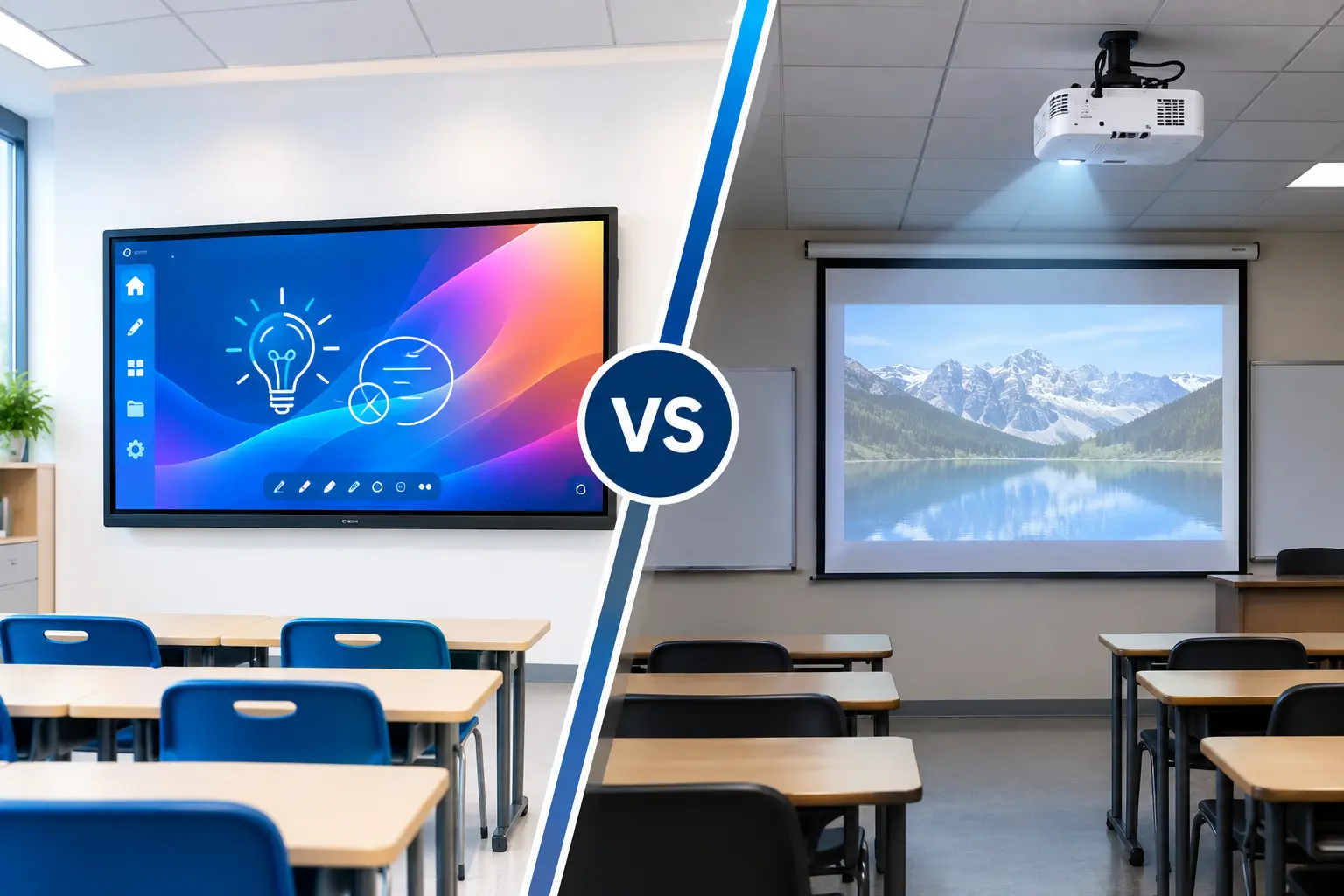
At first glance, an interactive flat panel display may seem more expensive than buying a projector.
But that’s only part of the story.
The real cost of technology isn’t just what you pay on day one. It’s what you spend over the next five to ten years.
Traditional projectors require lamp replacements every 2,000 to 4,000 hours.
They also need regular cleaning, filter replacements, and ongoing maintenance.
Interactive flat panels don’t have these issues.
Most models offer a lifespan of more than 50,000 hours, which is roughly 8 to 10 years of regular use.
They also consume 50% to 60% less power than many traditional projector systems.
Here’s a simple comparison:
| Feature | Traditional Projector | Interactive Flat Panel |
| Lamp Replacement | Every 2,000–4,000 hours | Not required |
| Lifespan | 3–5 years | 50,000+ hours (8–10+ years) |
| Maintenance | Regular cleaning and servicing | Very little maintenance |
| Energy Usage | Higher | 50–60% lower |
Although the initial investment is higher, the lower maintenance costs, longer lifespan, and energy savings make interactive flat panels a much smarter long-term investment for both schools and businesses.
6. Never Lose Important Meeting Notes Again
Be honest.
How many times have you finished a meeting, only for someone to ask, “Can you send me the notes?”
Then someone starts taking photos of the whiteboard before it’s erased. Or worse, important points get lost completely.
Interactive flat panel displays solve this problem. Everything written on the screen can be saved instantly. Meeting notes, lesson plans, diagrams, annotations, and brainstorming ideas can all be stored digitally.
Most modern interactive flat panels also support cloud integration, allowing files to be saved directly to Google Drive, Microsoft OneDrive, or Dropbox.
Many models even generate a QR code after the meeting.
Participants simply scan the QR code with their phones and instantly receive the complete meeting notes as a PDF.
Imagine a teacher finishing a science lesson.
Instead of asking students to copy everything before leaving the classroom, the teacher simply shares the lesson notes digitally. Students can review them anytime.
The same applies to businesses. Every team member leaves the meeting with exactly the same information.
No confusion.No missing notes.
7. One Display. Two Operating Systems.
Different people work in different ways.
Some only need basic apps for presentations and note-taking. Others need full Windows software for engineering, accounting, design, or business applications.
The good news? You don’t have to choose one over the other.
Many enterprise-grade interactive flat panel displays come with Dual Operating System support. They include a built-in Android operating system for everyday tasks and also support an OPS Windows module, which transforms the display into a full Windows PC.
For example, a teacher can quickly open educational apps using Android without connecting a laptop.
Later, the IT department can switch to Windows and run Microsoft Office, or other enterprise applications.
This flexibility makes one display suitable for multiple departments and different users.
8. Writing Feels Just Like Pen on Paper
One of the biggest complaints about older interactive whiteboards was the writing experience.
There was often a noticeable delay.
Sometimes the writing appeared in the wrong place. Calibration was another common issue.
Modern interactive flat panel displays have solved these problems.
Most premium displays now offer touch response times below 8 milliseconds, creating a smooth and natural writing experience that feels very similar to writing on paper.
Many displays also support up to 40 simultaneous touch points.
Imagine a classroom where several students solve math problems on the same screen at the same time. Or a business workshop where multiple team members brainstorm ideas together on a digital whiteboard.
Everyone can write, draw, highlight, or erase simultaneously without interfering with one another.
Some advanced panels even recognize different touch inputs automatically.
- A stylus writes.
- A finger moves objects.
- A palm erases content.
This creates a much more natural and intuitive experience for users.
9. Better Security and Easier Device Management
If your organization has one interactive display, managing it is easy.
But what if you have 20?
Or 100?
Many schools, universities, and businesses across the UAE manage multiple displays across different classrooms, campuses, or office branches.
Modern interactive flat panels include Mobile Device Management (MDM) tools that make administration much easier.
IT teams can install software updates remotely, deploy security patches, manage applications, and configure settings without visiting every display individually.
Many displays also include features such as:
- USB port locking
- User access controls
- Data encryption
- Single Sign-On (SSO)
- Remote monitoring
Some systems even allow administrators to send emergency announcements or important notices to every interactive display from one central dashboard.
This saves time while improving both security and operational efficiency.
10. Supports the UAE’s Vision for Digital Transformation
Technology isn’t just changing individual classrooms and offices. It’s helping transform the entire country.
The UAE has invested heavily in digital education, smart government services, and innovation through initiatives such as UAE Vision 2031, UAE Centennial 2071, and the Mohammad Bin Rashid Smart Learning Program.
These initiatives encourage schools, universities, businesses, and government organizations to adopt modern technologies that improve learning, collaboration, and productivity.
Interactive flat panel displays fit perfectly into this vision.
- They support paperless meetings.
- They reduce energy consumption.
- They encourage collaboration.
- They create smarter classrooms and more efficient workplaces.
Whether it’s a government office in Abu Dhabi, a university in Sharjah, or a corporate headquarters in Dubai, interactive flat panels are becoming an important part of the UAE’s digital future.
Conclusion
Technology continues to change how we learn, teach, communicate, and work.
An interactive flat panel display in UAE is a complete collaboration solution that combines presentation tools, digital whiteboarding, wireless screen sharing, cloud connectivity, and smart collaboration into one powerful device.
From improving classroom engagement by 30–40% to supporting hybrid meetings, reducing maintenance costs, delivering 4K Ultra HD visuals, and lasting more than 50,000 hours, the benefits are clear.
Whether you’re planning to upgrade a school, university, training centre, corporate office, or government organization, investing in an interactive flat panel display is a decision that supports better communication, higher productivity, and long-term value.