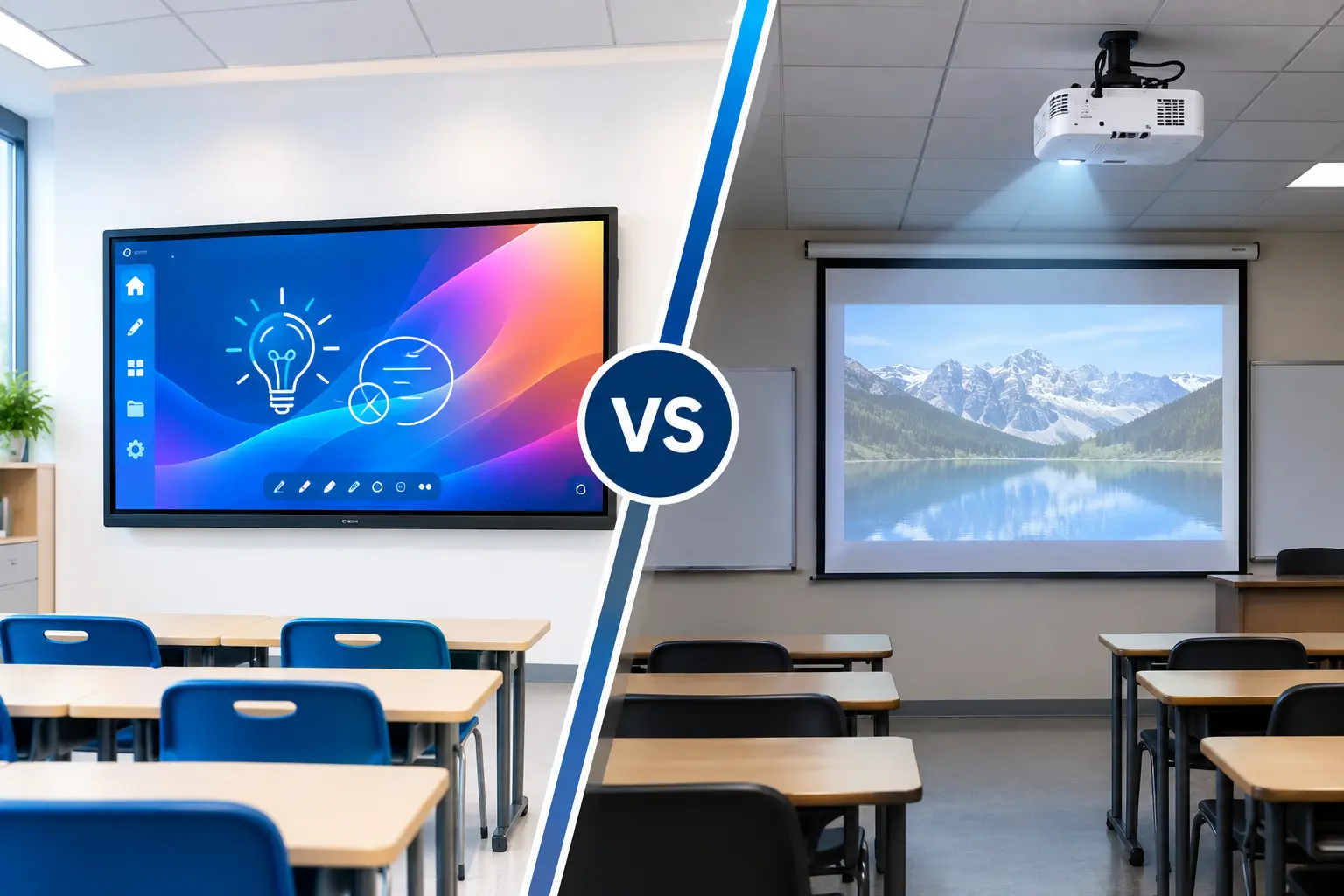
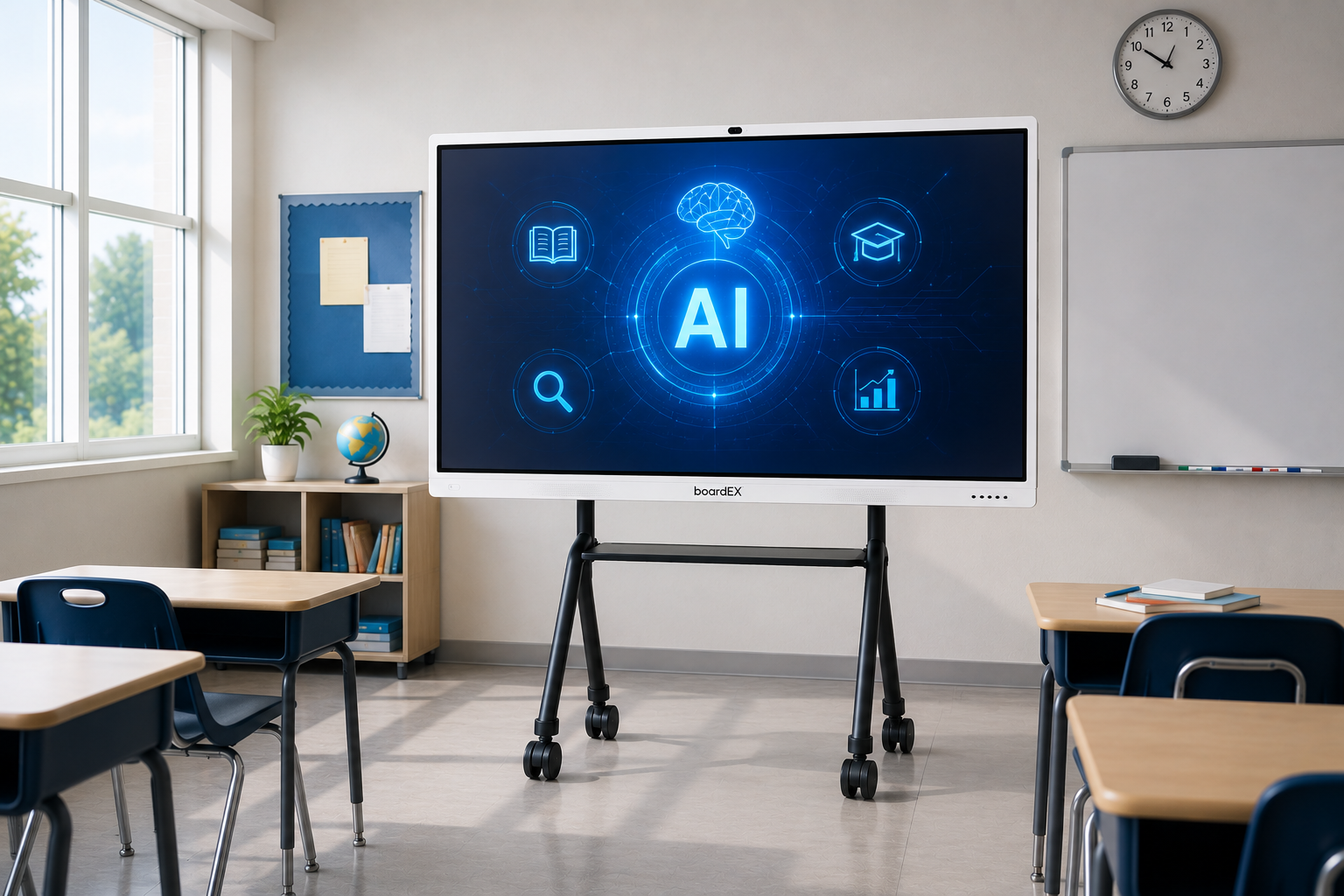
A few years ago, an interactive flat panel display was mainly seen as a replacement for a projector or a whiteboard. It made presentations better, allowed users to write on the screen, and helped people collaborate more easily.
Fast forward to 2026, and things have changed completely.
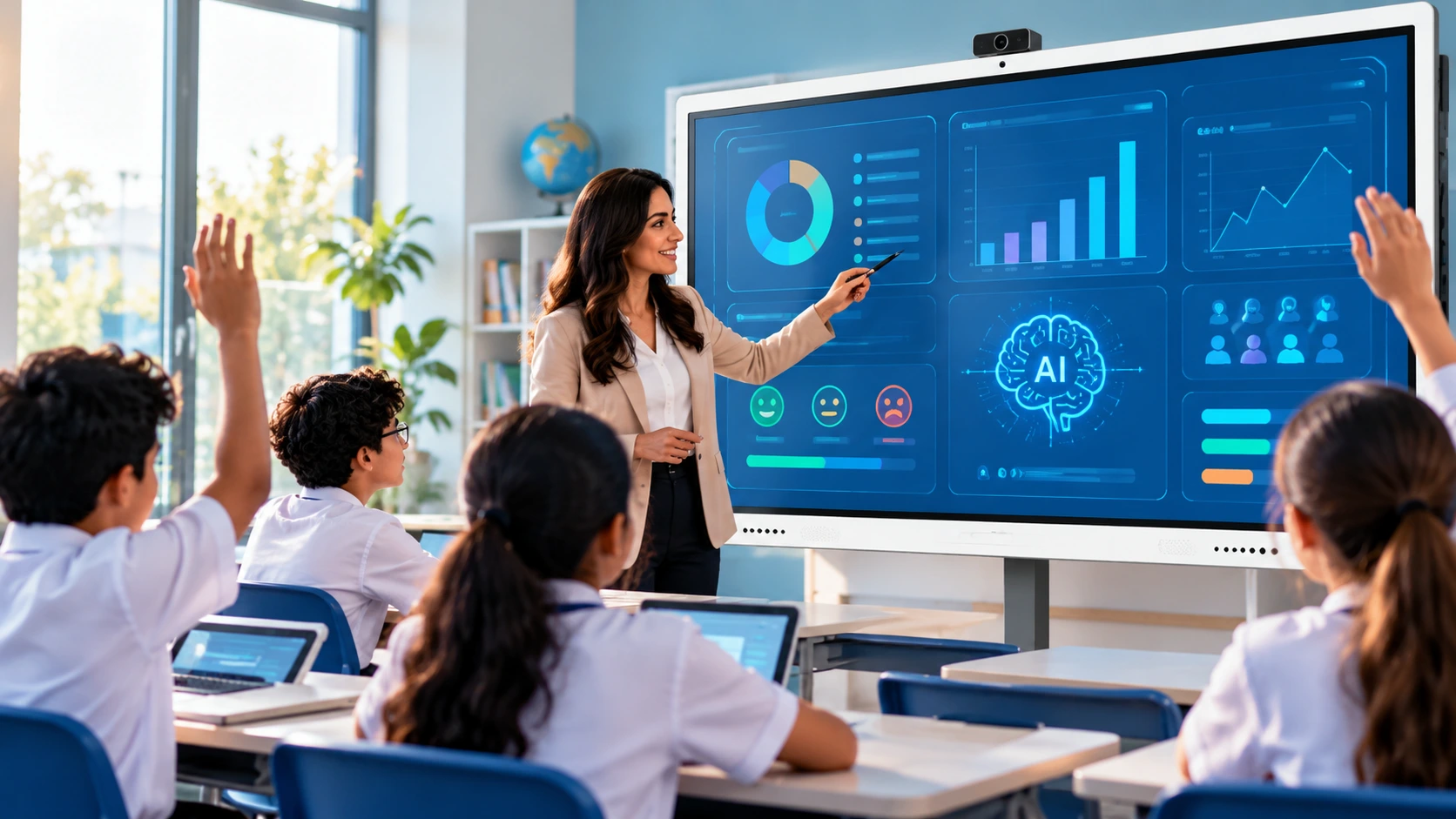
Thanks to Artificial Intelligence (AI), interactive flat panel displays have become much smarter. Today, they can do much more than display content. They can help teachers prepare lessons, generate quizzes, recognize handwriting, organize meeting notes, answer questions, and even assist during presentations.
Whether it’s a classroom, meeting room, or training center, AI is making interactive flat panels more useful than ever. Let’s see how this technology is changing the way people teach, learn, and work.
Interactive Flat Panels Are Becoming Smarter
Modern interactive flat panel displays are no longer just digital screens. They are becoming intelligent assistants.
Earlier, users had to switch between different devices and applications to complete simple tasks. A teacher needed one tool for presentations, another for quizzes, and another for lesson planning. Businesses often used separate software for meetings, note-taking, and collaboration.
AI brings many of these tasks together in one place.
Today’s interactive flat panels can understand commands, suggest ideas, organize information, and perform several tasks instantly. This saves time and allows teachers and professionals to focus on what matters most instead of spending time on repetitive work.
AI Makes Lesson Planning Much Easier
Lesson planning is one of the most important parts of teaching, but it can also be very time-consuming.
Teachers need to decide learning objectives, prepare activities, create worksheets, and plan assessments. This often takes hours.
AI helps simplify the process.
Many interactive flat panel displays now include built-in AI teaching tools. A teacher simply enters the subject and grade level, and the display can generate a complete lesson plan within seconds.
For example, if a teacher wants to teach the water cycle to Grade 5 students, the AI can suggest learning objectives, classroom activities, discussion questions, and homework ideas. The teacher can then review the suggestions, make changes if needed, and start teaching with confidence.
This saves valuable preparation time while making lessons more engaging.
Creating Quizzes Is Faster Than Ever
Preparing quizzes after every lesson can be repetitive.
Teachers often spend extra time writing questions, checking difficulty levels, and formatting assessments.
AI makes this task much easier.
After completing a lesson, teachers can simply ask the interactive flat panel to create a quiz based on the topic. Within seconds, the system generates different types of questions, including multiple-choice questions, true-or-false questions, fill-in-the-blanks, and short-answer questions.
For example, after teaching fractions, the AI can instantly prepare a short assessment that matches the lesson. Students get immediate practice, and teachers save valuable time.
Meetings Become More Organized
AI is not only helping teachers. It is also improving the way businesses conduct meetings.
During brainstorming sessions, people usually write ideas across the whiteboard. After the meeting, someone has to rewrite everything into a document.
This takes time and sometimes important points are missed.
AI helps organize everything automatically.
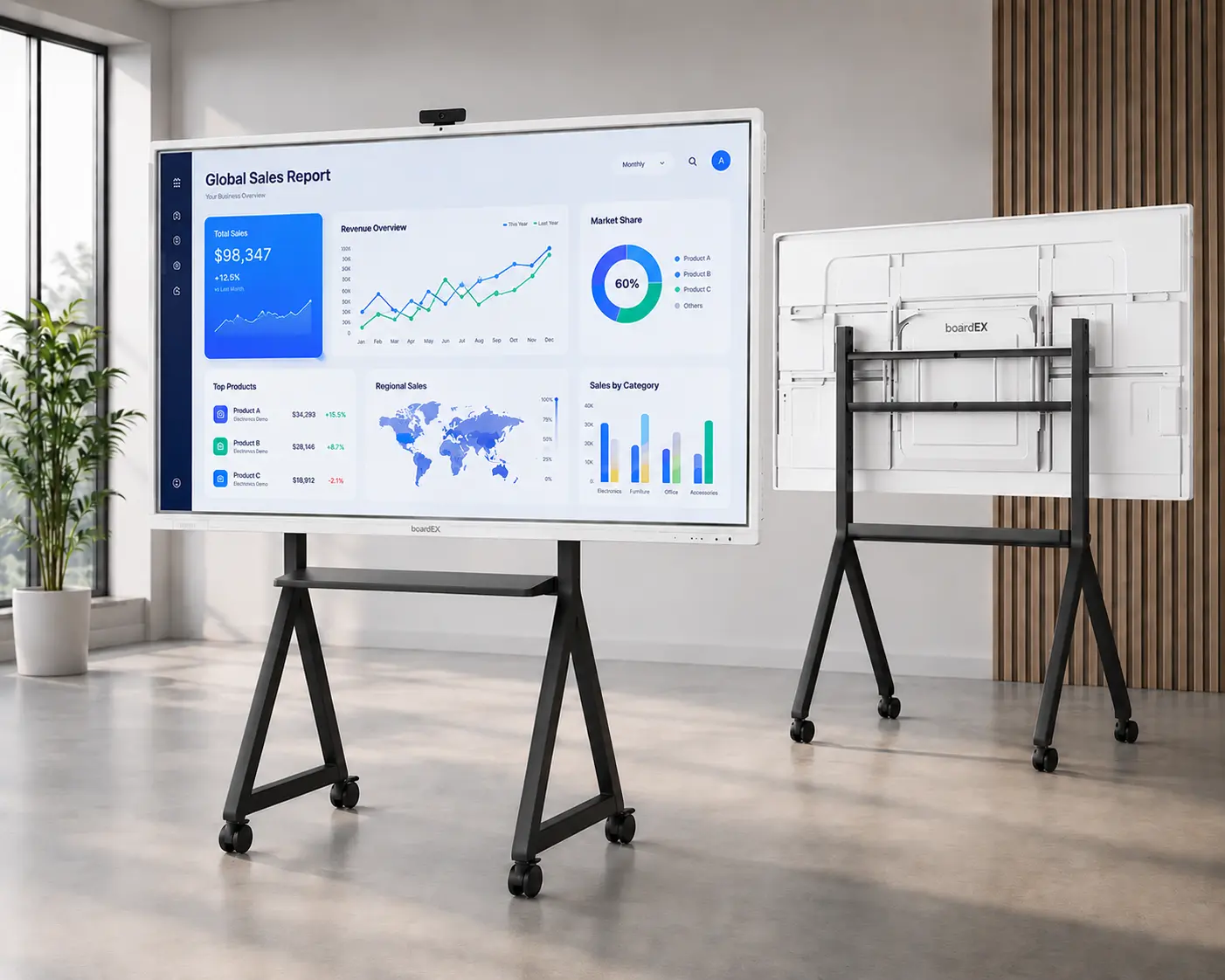
As participants write on the interactive flat panel, the AI recognizes the notes, groups similar ideas together, and creates a structured meeting summary. Teams can save the discussion and share it immediately with everyone involved.
Instead of spending time organizing notes later, employees can focus on taking action.
Handwriting Recognition Is More Accurate
Everyone has a different handwriting style.
Sometimes handwritten notes can be difficult to read, especially after a long meeting or busy classroom session.
Modern AI-powered handwriting recognition solves this problem.
Users can write naturally on the screen, and the AI converts the handwriting into clear digital text. This makes notes easier to read, edit, and share.
For teachers, this means students receive clean and well-organized lesson notes. For businesses, meeting records become more professional without extra effort.
AI Helps Explain Difficult Topics
One of the biggest advantages of AI is that it doesn’t simply provide answers. It helps explain them.
For example, if a student writes a mathematical equation on the interactive flat panel, the AI can solve the problem step by step. Instead of showing only the final answer, it explains each stage of the calculation.
The same applies to science, geography, and other subjects. AI can simplify complex concepts, making lessons easier to understand.
Teachers remain in control of the classroom, while AI provides additional support whenever needed.
Finding Learning Resources Takes Less Time
Every teacher has experienced this situation.
A student asks an unexpected question during class. The teacher searches online for an image, diagram, or educational video while the rest of the class waits.
AI makes this process much faster.
Instead of searching multiple websites, teachers can simply ask the interactive flat panel for what they need.
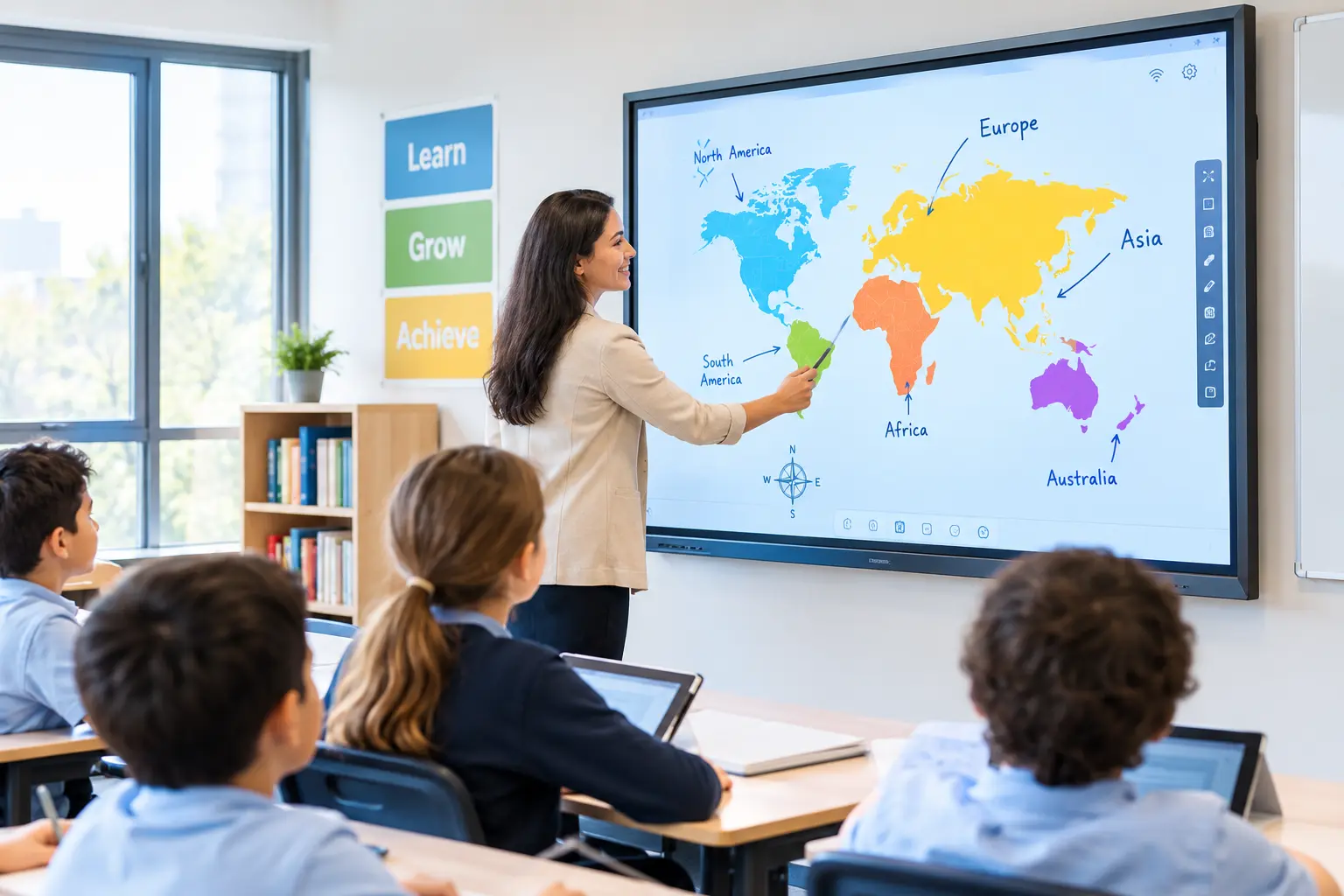
For example, they can request a 3D model of the solar system, a short video explaining volcanoes, or an animation of the water cycle. The AI quickly finds suitable content, allowing the lesson to continue without interruption.
This keeps students engaged and makes teaching much smoother.
Brainstorming Sessions Become More Productive
Brainstorming often produces lots of ideas in a short amount of time.
The challenge comes when it’s time to organize those ideas. AI can help with that too.
As participants write notes on the interactive flat panel, the AI automatically groups similar ideas together. Marketing ideas, project timelines, customer feedback, and budgets can all be organized into separate sections.
This makes discussions easier to follow and helps teams make decisions faster.
Instead of spending extra time organizing information after the meeting, everything is already structured.
AI Supports Multiple Languages
Many schools and workplaces in the UAE include people from different countries and language backgrounds.
Communication can sometimes become challenging.
AI-powered interactive flat panels help solve this problem by offering live translation and subtitle features.
For example, a presentation delivered in English can display Arabic captions on the screen. Educational content can also be translated into different languages when required.
These features make learning and collaboration more inclusive for everyone.
AI Saves Time Every Day
Perhaps the biggest benefit of AI is the amount of time it saves.
Small tasks that once took several minutes can now be completed in seconds.
- Lesson plans can be generated quickly.
- Quizzes can be created automatically.
- Meeting notes can be organized instantly.
- Learning resources can be found much faster.
Although each task saves only a little time, together they make a significant difference. Teachers have more time to focus on students, while businesses can spend more time making decisions and improving productivity.
AI Is Here to Support People
Some people worry that AI will replace teachers or professionals.
In reality, AI supports people, not replace them.
Technology can automate repetitive tasks, organize information, and provide useful suggestions. However, it cannot replace creativity, experience, communication, or human connection.
Teachers still inspire students. Managers still lead teams. Business professionals still make important decisions.
AI simply helps them do these jobs more efficiently.
Conclusion
Artificial Intelligence is changing interactive flat panel displays in exciting ways. What was once a simple presentation screen has become a smart assistant that supports teaching, learning, collaboration, and communication. From lesson planning and quiz generation to handwriting recognition and meeting summaries, AI is helping users save time while improving productivity.