Walk into a modern classroom in the UAE today, and you’ll notice something different.
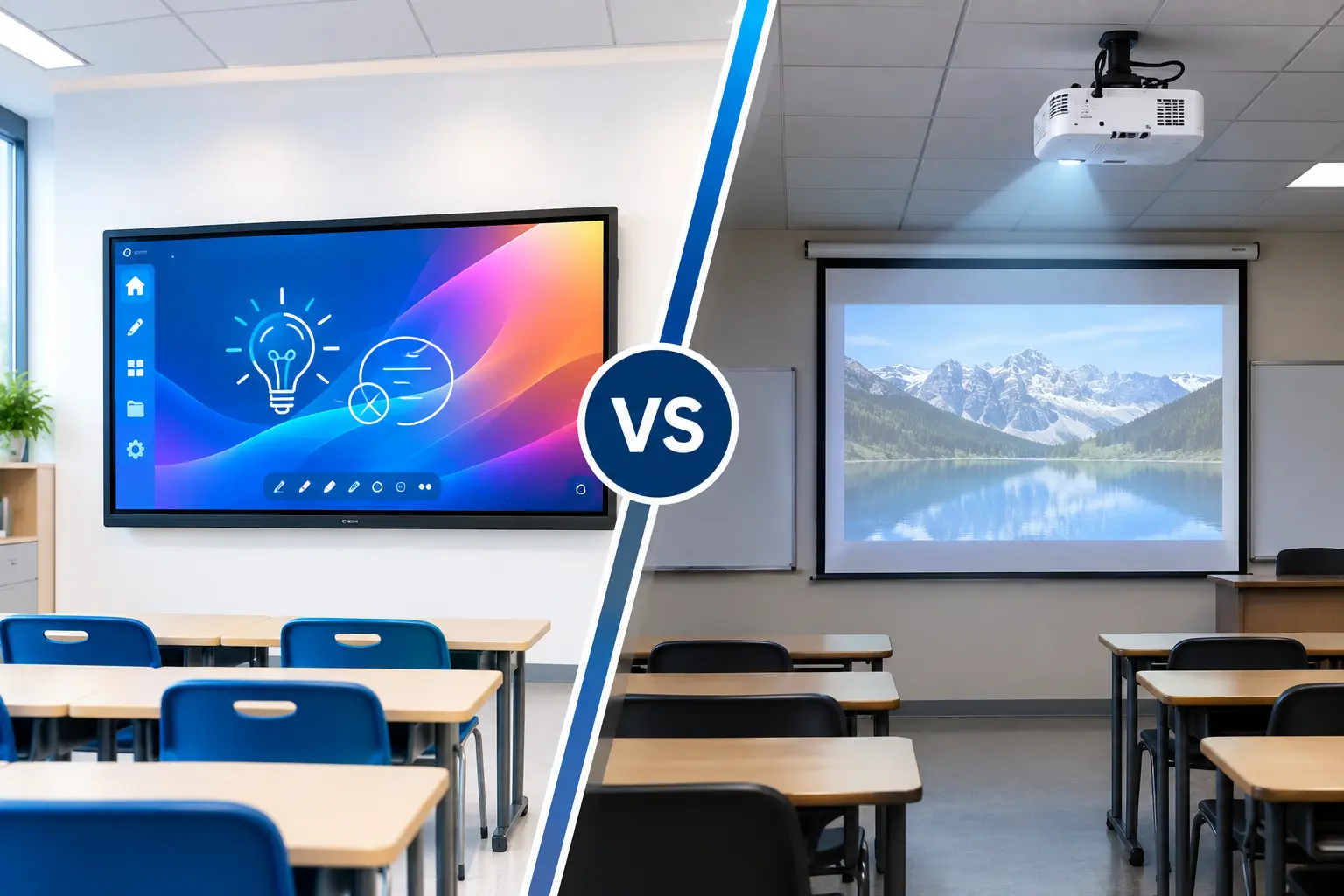
The traditional projector hanging from the ceiling is slowly disappearing. Instead, you’ll find a large interactive screen at the front of the classroom. Teachers are writing directly on it, students are solving problems on it, and lessons have become much more engaging.
So, why are schools making this change?
The answer is simple. Education is evolving, and classrooms need technology that supports modern teaching methods. Projectors served schools well for many years, but today’s students expect more interactive and engaging learning experiences.
Interactive Flat Panel Displays (IFPDs) are helping schools create smarter classrooms where students don’t just watch lessons, they participate in them.
Let’s look at why more schools across the UAE are replacing projectors with interactive flat panels.
1. Better Learning Starts with Better Engagement
Let’s be honest.
Most students find it difficult to stay focused when they’re only listening to a teacher or looking at projected slides.
Interactive flat panels change that.
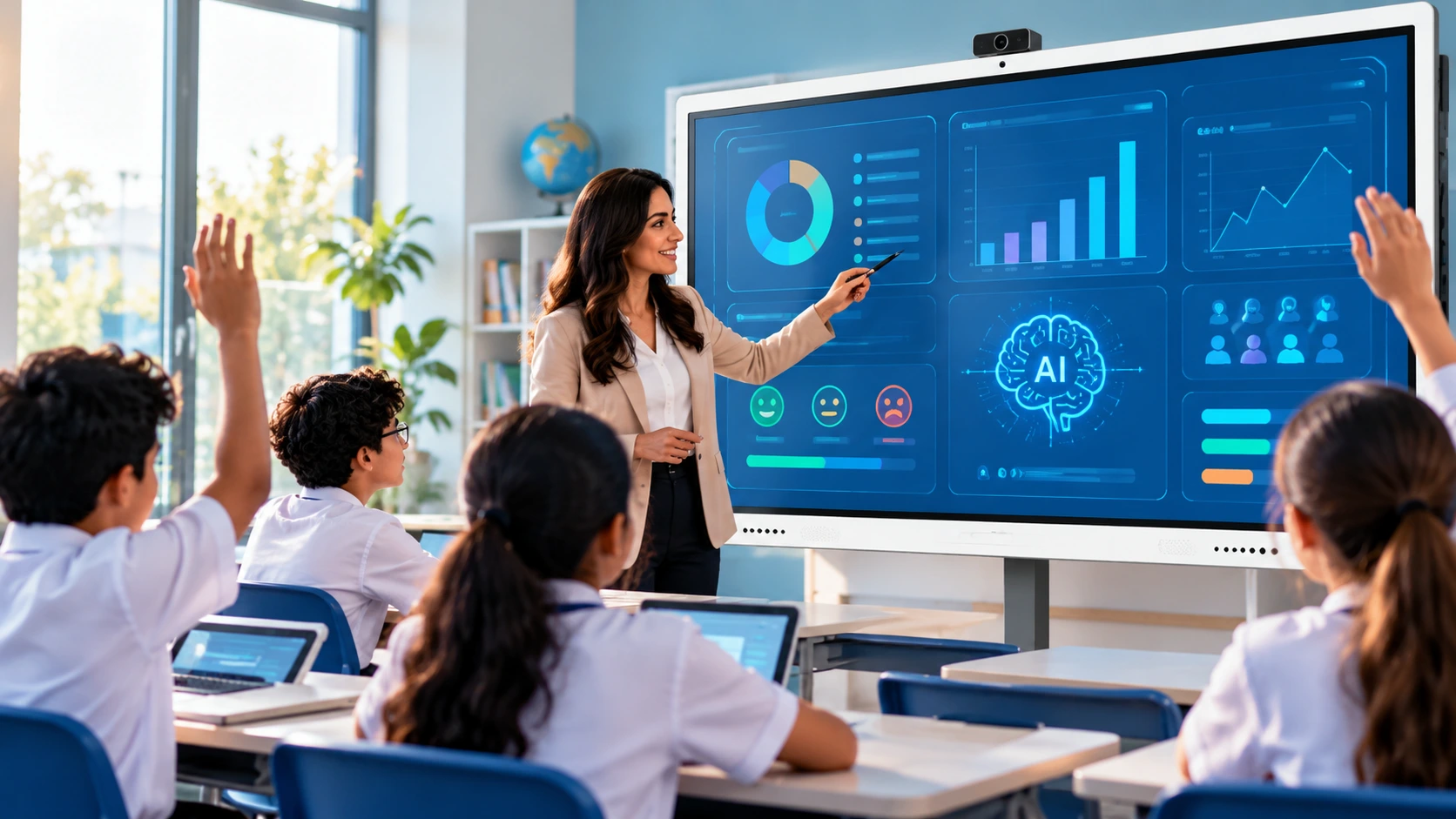
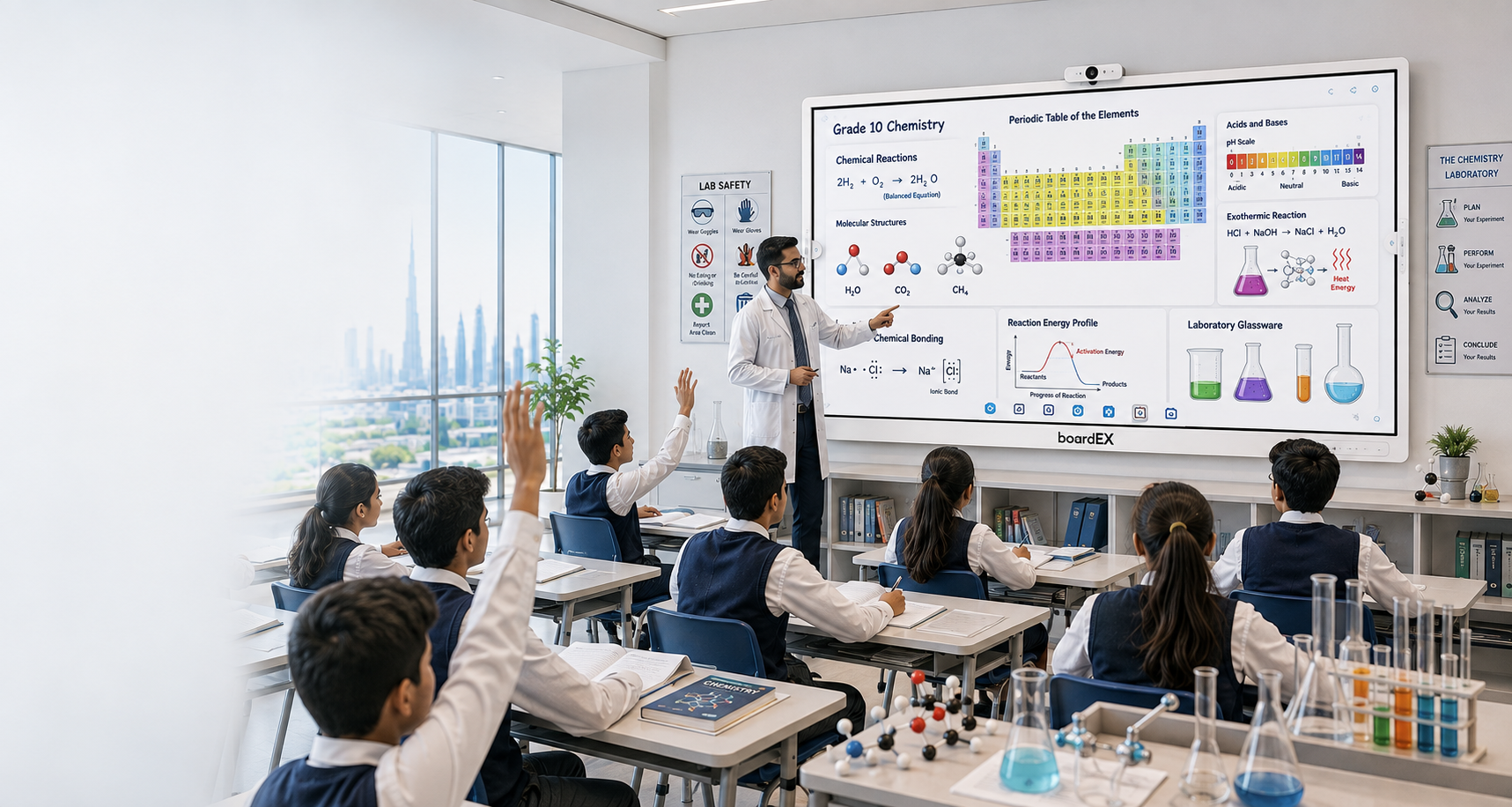
Instead of simply watching a lesson, students can come to the screen, write answers, solve problems, draw diagrams, and interact with educational content.
For example, during a science class, a teacher can display a 3D model of the human heart. Students can rotate the model, zoom in, label different parts, and learn through interaction instead of memorization.
Studies have shown that interactive learning can improve student engagement and knowledge retention by 30% to 40% compared to traditional teaching methods.
2. No More Dark Classrooms
If you’ve ever used a projector, you know the routine.
Close the curtains… Turn off the lights…
Hope everyone can still see the screen clearly.
Projectors often struggle in bright classrooms, especially in countries like the UAE where sunlight is strong throughout the year.
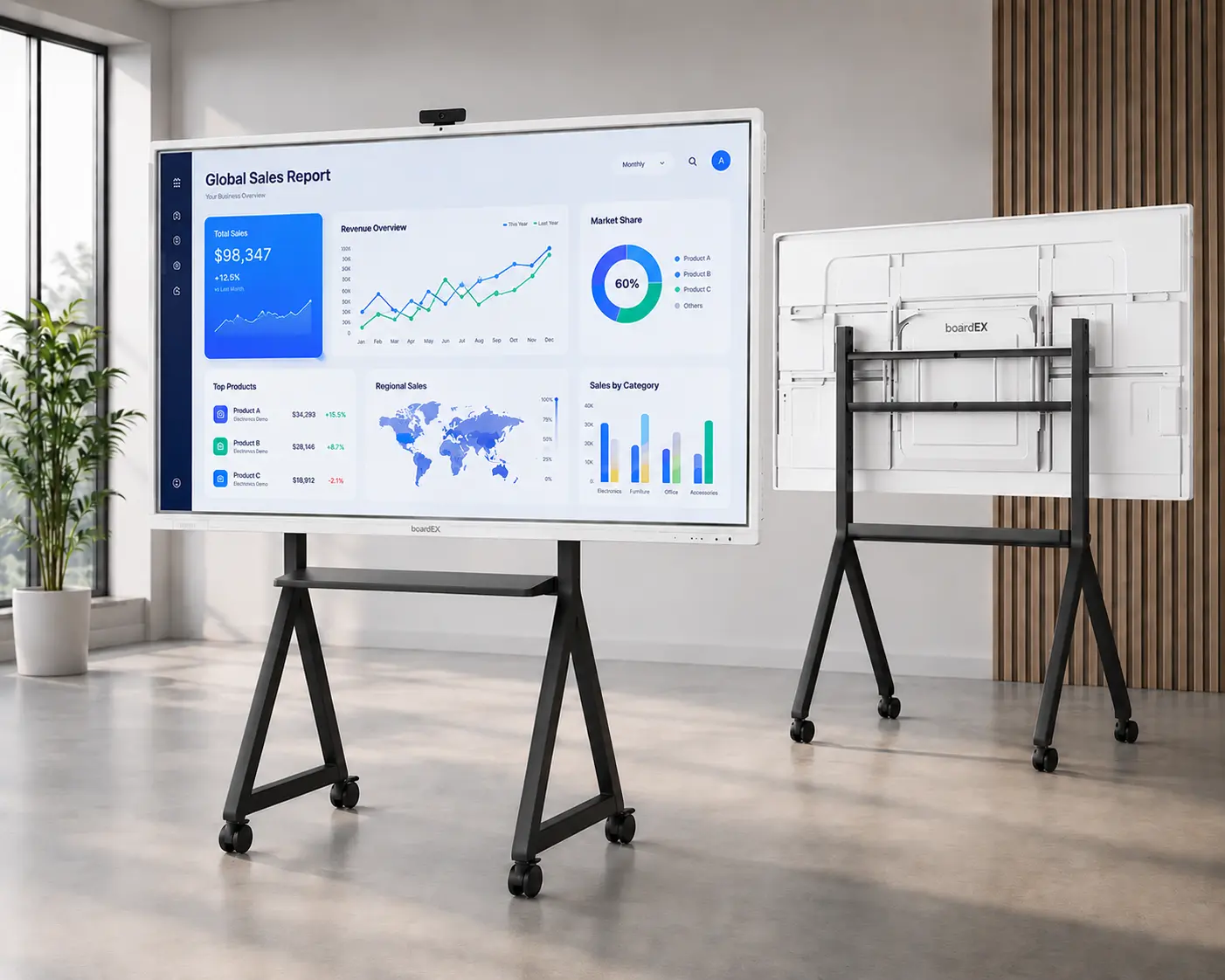
Interactive flat panels solve this problem. They use bright 4K Ultra HD displays that remain clear even in well-lit classrooms. Students can see text, images, videos, and presentations without dimming the room.
This creates a more comfortable learning environment for both teachers and students.
3. Teachers Can Teach in More Creative Ways
Every student learns differently.
Some understand better through videos. Others learn through diagrams, animations, quizzes, or practical demonstrations.
Interactive flat panels allow teachers to combine all of these into a single lesson.
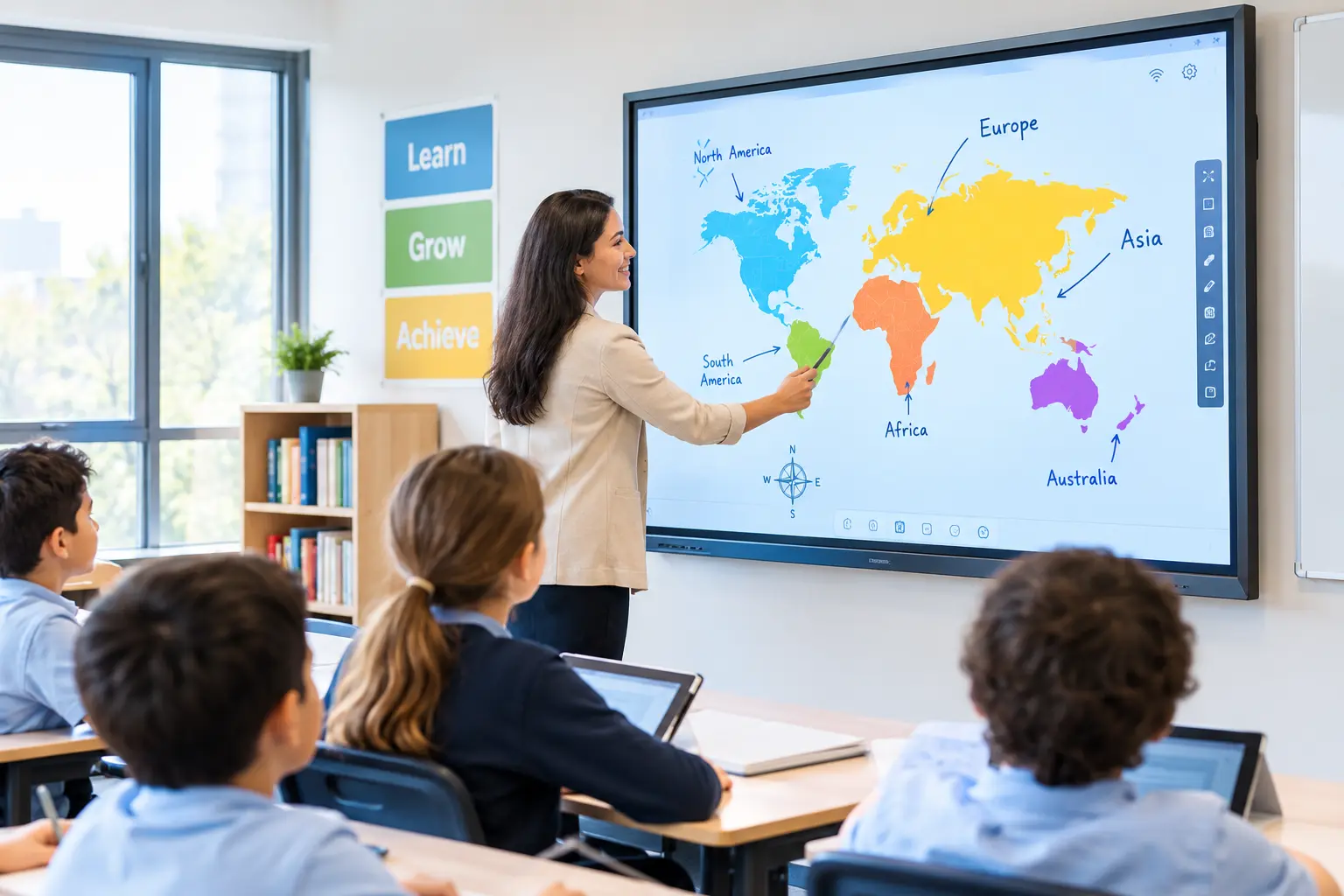
A teacher can switch between a presentation, an educational website, handwritten notes, videos, and interactive quizzes within seconds.
For example, an English teacher can display a story, underline important sentences, play a pronunciation video, and ask students to answer questions directly on the screen.
Lessons become more interesting, and students remain involved from beginning to end.
4. Goodbye Projector Maintenance
Projectors require regular attention.
Bulbs need replacing. Filters need cleaning. Image quality decreases over time. Sometimes the projector refuses to cooperate just before an important lesson.
Interactive flat panels remove these frustrations. They don’t use projector lamps, require very little maintenance, and usually have a lifespan of more than 50,000 hours. This saves schools both time and maintenance costs. Teachers can simply switch on the display and start teaching.
5. Students Can Learn Together
Learning is no longer just about listening. Collaboration has become an important part of education.
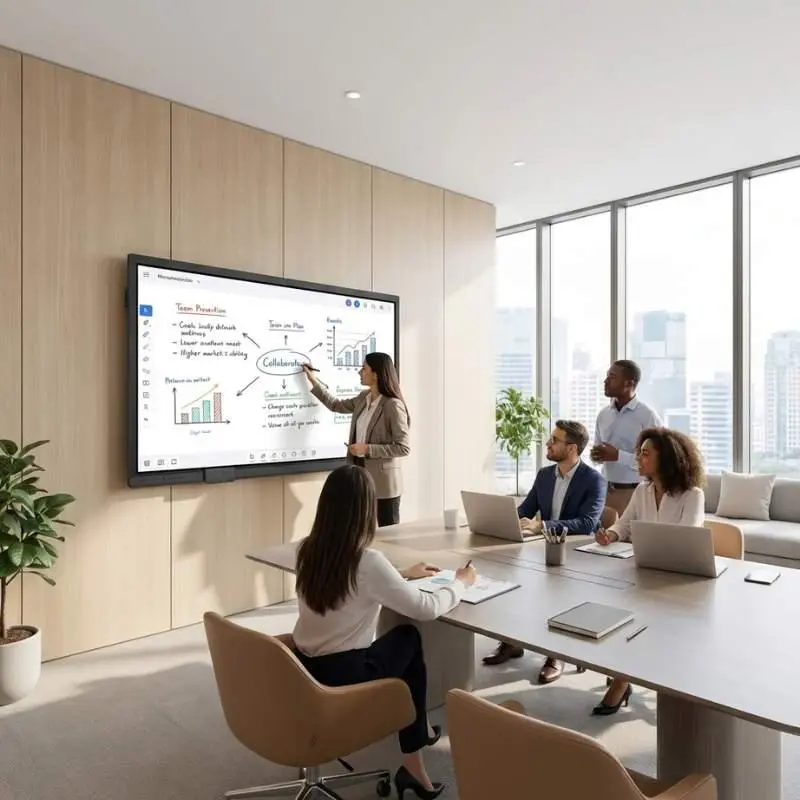
Modern interactive flat panels support multiple touch points, allowing several students to work on the screen at the same time.
Imagine a math class where four students solve different equations together. Or a geography lesson where groups identify countries on an interactive map.
This encourages teamwork, communication, and active participation. Students learn from one another instead of learning alone.
6. Easy Access to Digital Learning Resources
Today’s classrooms use much more than textbooks.
Teachers rely on videos, online learning platforms, educational apps, digital libraries, and interactive activities.
Interactive flat panels provide direct access to these resources. Many displays include built-in Android systems, allowing teachers to open educational apps without connecting an external computer.
If more advanced software is needed, schools can also connect Windows devices. Everything is available from one screen.
7. Sharing Lessons Has Never Been Easier
One common problem with traditional whiteboards is that everything disappears once it’s erased.
Interactive flat panels make sharing lessons much simpler. Teachers can save their notes, diagrams, and annotations instantly.
These files can then be shared with students through Google Drive, Microsoft OneDrive, email, or QR codes.
For example, if a student misses a class due to illness, the teacher can simply share the lesson notes digitally instead of rewriting everything. This supports both classroom learning and remote learning.
8. Supports Hybrid and Smart Learning
Education is becoming more flexible.
Many schools now conduct online classes, virtual parent meetings, and hybrid learning sessions when needed.
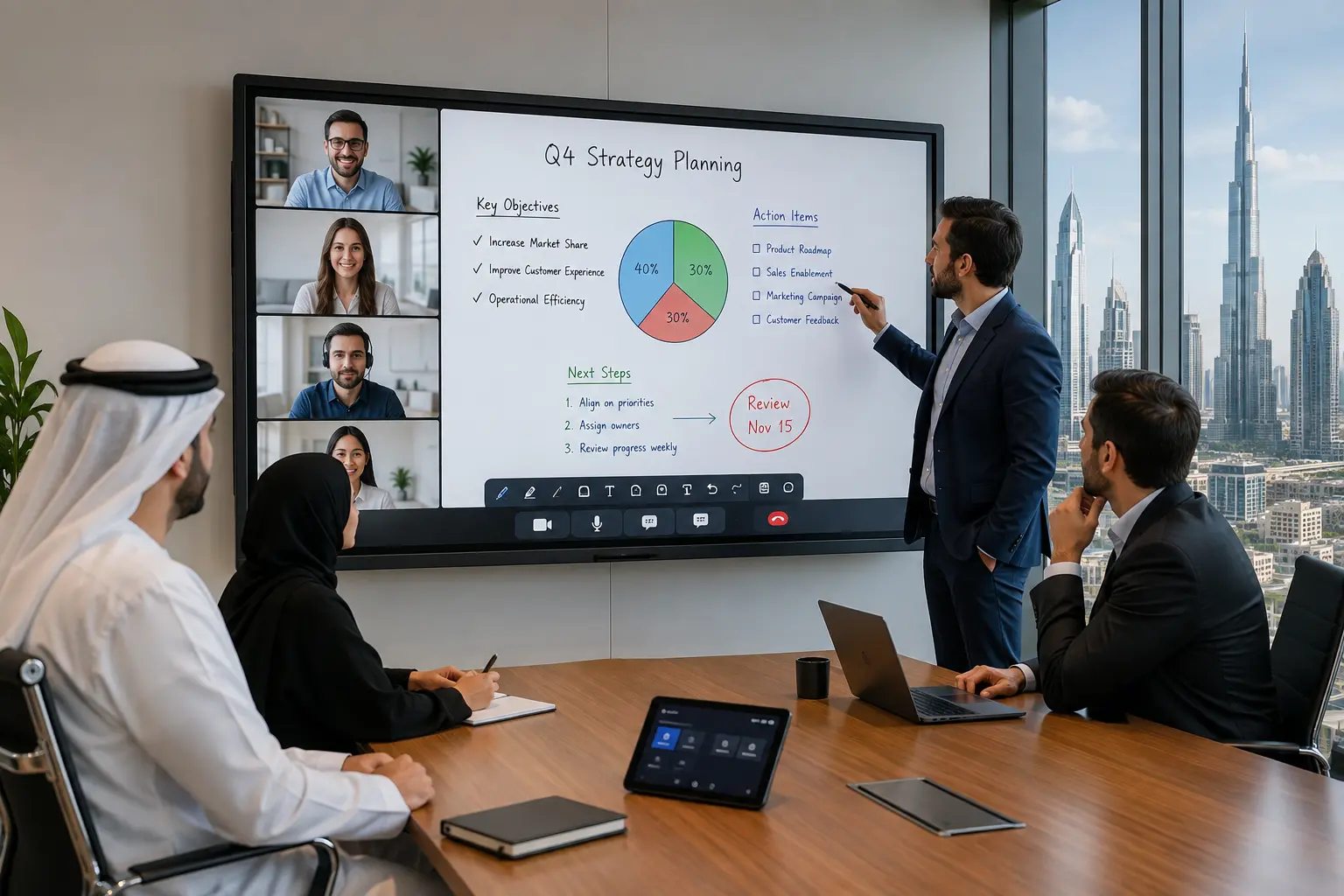
Interactive flat panels support video conferencing platforms such as Microsoft Teams, Zoom, and Google Meet. Teachers can deliver lessons to students inside the classroom while remote learners participate at the same time.
Everyone sees the same content, hears the same explanations, and can interact during the lesson. This makes learning more accessible and future-ready.
9. Supports UAE’s Vision for Smart Education
The UAE has invested heavily in digital education through initiatives such as UAE Vision 2031, UAE Centennial 2071, and the Mohammed Bin Rashid Smart Learning Program.
These initiatives encourage schools to create technology-rich learning environments that prepare students for the future.
Interactive flat panels support these goals by making classrooms more digital, collaborative, and engaging.
Schools that invest in modern classroom technology are helping students develop digital skills that will benefit them throughout their education and careers.
10. A Long-Term Investment for Schools
Although interactive flat panels cost more than projectors initially, they provide better value over time.
- They require less maintenance.
- They consume less power.
- They last much longer.
Most importantly, they improve the overall teaching and learning experience.
Instead of repeatedly spending money on projector bulbs, repairs, and maintenance, schools can invest in a solution that continues to perform reliably for many years.
It is not just an upgrade in technology. It is an investment in better education.
Conclusion
Projectors played an important role in classrooms for many years, but the needs of modern education have changed. Schools today need technology that encourages participation, supports digital learning, and helps teachers deliver more engaging lessons.
Interactive flat panel displays for schools offer exactly that. They combine high-quality visuals, touchscreen interaction, digital collaboration, and easy access to educational resources in one device. As more schools across the UAE embrace smart learning initiatives, it’s clear why interactive flat panels are becoming the preferred choice for classrooms.